Identifying Niche Electrophysiology Expertise in a WPW Cardiac Arrest Case
By Michelle Mitchell, Marketing Manager
Posted 05 March 2026
2 Minute Read
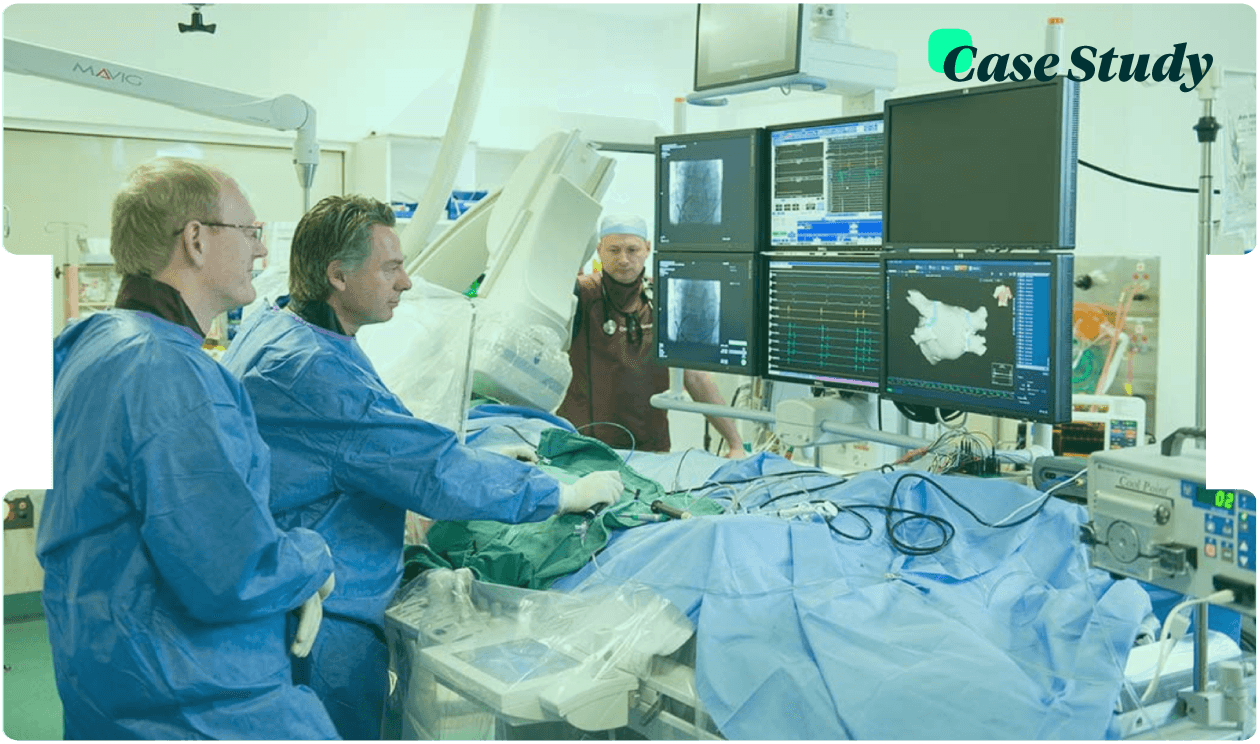
When a firm approached INNEG on a high value clinical negligence claim involving WPW syndrome and cardiac arrest resulting in permanent brain injury, our Analyst rapidly sourced specialist cardiac electrophysiology expertise to address the complex causation questions at the heart of the case.
A claimant firm approached INNEG in relation to a serious clinical negligence claim involving Wolff–Parkinson–White (WPW) syndrome and a subsequent cardiac arrest that resulted in permanent cognitive injury.
The claimant, a young adult, had a known history of WPW and had experienced ongoing symptoms including palpitations and episodes of tachycardia. It was alleged that despite these warning signs, he was not referred for specialist electrophysiology assessment or risk stratification. He later suffered a cardiac arrest linked to arrhythmic complications of WPW, leaving him with significant neurological impairment.
At the centre of the case was a highly specialised medical question: whether earlier referral to a cardiac electrophysiologist and consideration of catheter ablation would, on the balance of probabilities, have prevented the cardiac arrest and resulting brain injury.
The Challenge
The solicitor required an expert capable of addressing several technically complex issues, including:
• risk stratification in symptomatic WPW
• accepted thresholds for referral to electrophysiology services
• indications and timing for catheter ablation in younger patients
• causation in relation to sudden arrhythmic events
This type of opinion sits within a narrow subspecialty of cardiology. While many cardiologists treat arrhythmia patients, only a small number practise as specialist cardiac electrophysiologists with extensive experience performing invasive electrophysiology studies and ablation procedures.
In a claim involving catastrophic neurological injury, the evidential standard was high. The solicitor required not simply a cardiologist, but a practising electrophysiologist whose clinical work directly aligned with the issues in dispute.
INNEG’s Approach
Every enquiry handled by INNEG is managed by a dedicated Analyst who works alongside the instructing solicitor from the outset of the case through to expert nomination and instruction.
This continuity is central to the INNEG model. Rather than enquiries moving between departments, the same Analyst remains responsible throughout, developing a detailed understanding of the case and the medical issues it raises.
In this matter, our Analyst reviewed the clinical allegations and identified that the appropriate discipline was not general cardiology, but specialist cardiac electrophysiology.
The search was therefore focused specifically on consultants with demonstrable expertise in:
• invasive electrophysiology studies
• catheter ablation for supraventricular arrhythmias
• risk assessment and management of WPW syndrome
Using INNEG’s national panel and wider network of vetted specialists, our Analyst rapidly identified a small number of consultants whose current clinical practice aligned precisely with these issues.
Three suitable experts were nominated to the solicitor, each a practising consultant cardiac electrophysiologist working within tertiary cardiac centres and experienced in the management of complex arrhythmia cases.
Full CVs and availability were provided, enabling the solicitor to review and select the most appropriate expert for the case.
The Outcome
Despite the niche nature of the subspecialism and the relatively small national pool of electrophysiologists, INNEG was able to secure suitable nominations quickly and without delay to the case timetable.
The solicitor was able to instruct an expert whose day to day clinical practice directly reflected the issues at the centre of the claim, ensuring the opinion carried appropriate authority in a complex cardiac negligence case.
Why This Matters
In serious cardiac negligence claims, the distinction between a relevant expert and the right expert can be critical.
Subspecialty expertise matters. Conditions such as WPW syndrome sit within a highly specialised area of cardiology where risk assessment, electrophysiology studies and ablation decisions require detailed technical understanding.
INNEG’s role is not simply to provide a list of available experts. Our Analysts review the medical issues in detail and identify the discipline and subspecialty most appropriate to the questions the case raises.
By combining detailed case analysis with access to a wide national network of subspecialists, INNEG helps solicitors secure authoritative expert evidence even in the most specialised areas of medicine.
Tags:
- Cardiologist Expert Witness
- Cardiology Expert Witness
- Cardiac Negligence
About The Author

Michelle Mitchell
Marketing Manager
Michelle Mitchell is the Marketing Manager at INNEG, where she leads the development and execution of marketing strategies to support the company's growth and brand presence. With a keen eye for detail and a passion for impactful communication, Michelle works closely with both internal teams and external partners.
Find out why 70+ legal firms partner with INNEG.
Request a callback, or contact us.
INNEG respects your privacy. Any information you share with us will be used only to respond to your query.
Phone
+44 161 870 2461Thank you for your request!
We will get back to you as soon as possible.