Beyond Survival: Causation, Prognosis and Future Risk in Cancer Claims
By Professor Justin Stebbing, Professor of Cancer Medicine and Medical Oncology
Posted 19 August 2026
10 Minute Read
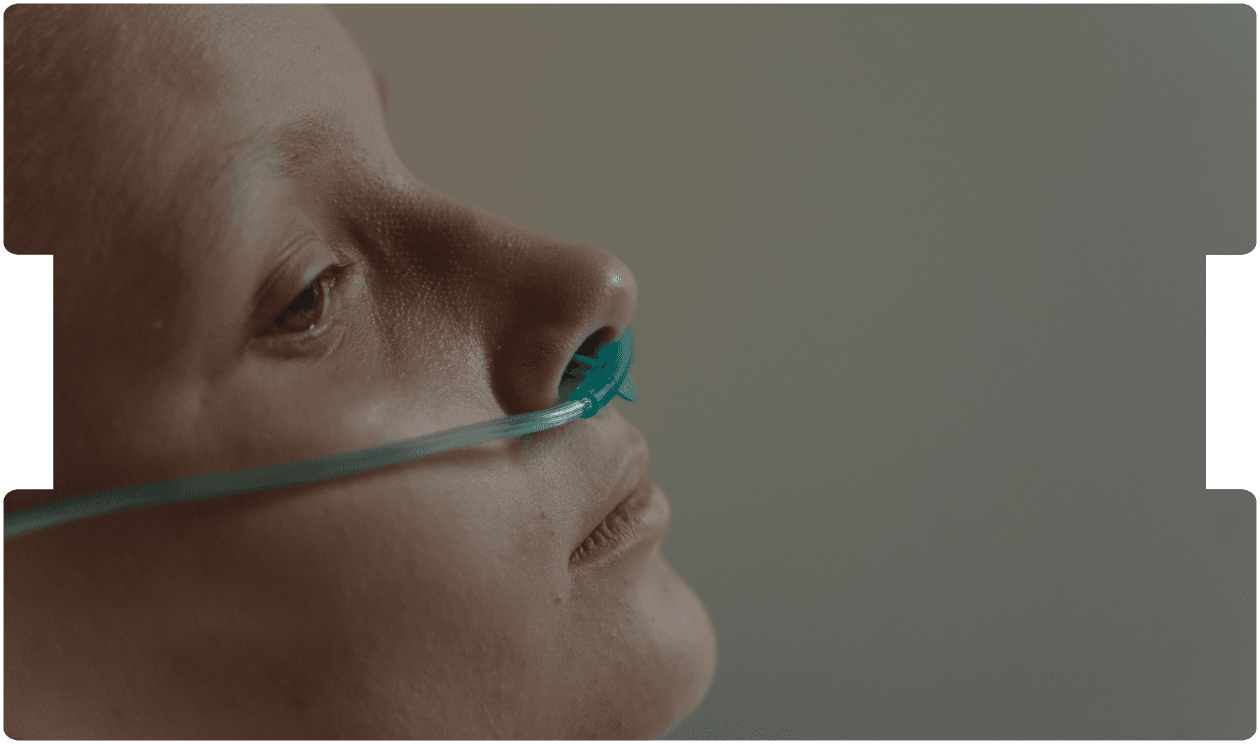
For solicitors handling cancer claims, survival does not end the causation enquiry: the real issue may be the additional treatment, long-term morbidity and future risk caused by a negligent delay or error.
Cancer survivorship used to be the exception you celebrated at the end of a clinic letter. Now, in many tumour types, it is the expected outcome, at least in the short to medium term. Targeted agents, immunotherapies and better systemic and local treatments have transformed survival curves. But they have also transformed the nature of harm. Increasingly, in oncology negligence litigation, the patient is alive - sometimes many years after the index events - yet carrying a burden of treatment, toxicity and future risk that looks very different from the world in which our traditional thinking on causation was formed. For solicitors handling high value cancer claims, the question is less often “Did negligence cause death?” and more “What, precisely, has this delay or error added to this person’s life in terms of treatment, morbidity and prognosis?”
Imagine, for example, a woman in her early 40s who presents to her GP with a small, palpable breast lump. There is a delay of several months before referral. When she is finally seen, the tumour is larger, with axillary nodal involvement. She undergoes a mastectomy because the cancer is large, and axillary clearance, adjuvant chemotherapy, radiotherapy, more chemotherapy with CDK4/6 inhibitors and a decade of endocrine therapy. Ten years later she is alive, raising her children and working. She is also living with chronic lymphoedema, body image issues, neuropathy, menopausal symptoms, fatigue and anxiety about recurrence. In this situation, it is not enough to say that because she survived, negligence “did no real harm.” From a medicolegal perspective, the key issue is what difference the delay made to the stage and biology of the cancer, the treatment she required, and her long‑term risks, and how that maps onto recognised legal tests for causation.
In breast cancer claims, the treatment burden associated with delayed diagnosis can therefore be a significant causation issue in its own right, even where the claimant’s overall survival is not materially altered.
Modern oncology complicates this analysis in several ways. First, we increasingly treat cancer as a chronic disease rather than a short, fatal trajectory. We talk about “durable responses” rather than cure; we rechallenge with lines of targeted therapy as resistance mutations appear; we maintain patients on immunotherapies for years. The line between acute treatment and survivorship has blurred. This means that the harms of an error may unfold slowly: additional cycles of chemotherapy that might otherwise have been avoided, a more radical operation, a higher likelihood of metastatic relapse in the medium term, or a marginal reduction in overall life expectancy rather than an immediate, obvious difference between life and death. For lawyers used to thinking in fairly binary terms - did the negligence make the difference between survival and death? - this can make causation feel slippery. Yet it is exactly where expert oncology opinion is most needed.
Second, the biology of the tumour often matters more than the simple length of a delay. Cancers are not homogeneous. Some breast cancers, for instance, are indolent luminal tumours with long doubling times; others are aggressive triple negative cancers where a few months can plausibly shift a patient from node negative to node‑positive incurable disease. In colorectal cancer, the tempo of progression from polyp to invasive disease, and then to metastatic spread, varies widely between individuals. When advising on causation in a survivor, oncologists therefore ask a series of structured questions: given what we know about this tumour type and grade, is it more likely than not that, without the delay or error, the cancer would have been detected at an earlier stage? If so, what treatment would then have been required? And what difference would that have made to the patient’s prognosis and treatment‑related morbidity?
The importance of tumour biology when assessing the effect of diagnostic delay is seen across cancer types, because the same period of delay may be clinically insignificant in one tumour but materially alter treatment or prognosis in another.
Those questions sound technical, but their legal significance is straightforward. In a “but for” framework, we are being asked whether, on the balance of probabilities, the patient’s additional treatment and risk can be attributed to the negligence. Take the woman described above. If, absent the delay, she would probably have undergone breast‑conserving surgery with sentinel node biopsy, shorter chemotherapy, less extensive radiotherapy and a lower risk of lymphoedema, then even though she is alive, the negligence has clearly caused additional, concrete harms. By contrast, if the tumour biology is such that nodal involvement and the need for systemic therapy were overwhelmingly likely whenever the cancer was picked up, the delay may have made little or no difference to stage or treatment, even if it understandably caused distress. A helpful expert report in this setting does not simply state conclusions; it walks the reader through the biological reasoning, tying each step back to what is, and is not, more likely than not.
A third complexity, particularly in the era of targeted and immunotherapies, is that the treatments themselves can cause novel, sometimes delayed, toxicities. Immune checkpoint inhibitors can trigger endocrine failure, colitis, pneumonitis or other problems, many of which such as hormonal abnormalities being long lasting. Targeted agents can cause cardiac dysfunction, severe skin toxicities or chronic diarrhoea. Many of these side effects are manageable; some are lifechanging. Survivors may therefore carry a double burden: the legacy of their cancer, and the legacy of the drugs that kept it at bay. When negligence has led to more advanced disease, such that patients require more intensive, multi‑agent or prolonged systemic therapy than they otherwise would have, the risk and reality of these toxicities become an important part of causation and quantum. The medico‑legal question is not only “Would the patient have needed chemotherapy?” but “Would they have needed this much chemotherapy, with this combination and duration, and therefore this level of risk?”
Life expectancy is another area where survivorship and causation intersect in subtle ways. In many cancers, five-year survival now looks reassuring, yet the tail of the curve - late recurrences and long‑term mortality - can still be significantly affected by stage at diagnosis. This is especially true of the example of the woman in her 40s above, with a hormone receptor positive breast cancer; we are now seeing relapses of these decades later. A delay that moves a patient from stage II to stage III may not change the fact that they are alive at five years but can still reduce their expected lifespan by a meaningful, if modest, number of years. When asked to quantify this, oncologists must combine population‑level data with an assessment of individual factors such as age, comorbidities, response to treatment and tumour biology. For solicitors, it can be helpful to think in terms of probabilities: are we saying that the delay reduced this person’s chance of ten‑year survival from, say, 85% to 70%? If so, is that reduction sufficiently large and sufficiently attributable to the negligence to satisfy the relevant legal test? It is in this grey zone - between clear, binary outcomes - that careful, transparent reasoning is most valuable.
Future risk is not confined to recurrence. Survivors live long enough to experience late effects of radiotherapy (cardiac disease, second malignancies), chemotherapy (cardiomyopathy, neurocognitive change, infertility) and endocrine manipulation (osteoporosis, metabolic syndrome). They may also have heightened vulnerability to other illnesses because of immunosuppression or organ damage. In causation analysis, we are often asked to comment on how far a negligent delay has increased these future risks. For instance, if a more advanced tumour required additional nodal radiotherapy, has that materially increased the risk of lymphoedema or brachial plexopathy? If extra cycles of anthracyclines were given, has that increased the chance of heart failure in later life? These questions matter both for general damages - the lived experience of harm - and for future care and loss of earnings calculations.
All of this makes oncology experts sound like actuaries, but at its core the task is clinical. We are trying to reconstruct the counterfactual: what would this patient’s cancer journey probably have looked like with nonnegligent care, and how does that differ from what happened? In doing so, we must be honest about uncertainty. Medicine does not offer the precision of a physics experiment. Two patients with seemingly identical tumours can behave very differently. The right role for expert evidence is not to claim impossible certainty, but to narrow the range of plausible scenarios and explain, with reasons, which is more likely than not. For a solicitor or judge, that reasoning is often more important than any single number.
There is also a human dimension that can get lost in the technicalities. Many survivors describe the aftermath of cancer as a “new normal” - life divided into before and after. Fatigue, pain, cognitive fog, body image changes, sexual dysfunction and fear of recurrence may all persist long after treatment ends. When negligence has contributed to these outcomes - by necessitating more aggressive surgery, for instance, or by allowing disease to progress to a point where systemic therapy could no longer be avoided – the law must somehow capture that reality. That does not mean that every delay or error translates into a successful causation argument; sometimes, the cancer biology is such that earlier intervention would not have altered the trajectory. But it does mean that survivorship cannot be treated as a simple binary marker of “no harm.”
For legal practitioners, the practical implications are several. First, it is important to identify at an early stage what the real causation issue is in each case. Is it about life expectancy, the nature and intensity of treatment, the development of specific complications, or some combination of these? Second, don’t be afraid to ask your oncology expert to walk you through the biological logic, not just provide bottom‑line answers. A well‑reasoned report that explains how a particular delay interacts with known progression patterns in that tumour type is far more persuasive than one that merely asserts conclusions. Third, remember that survivorship is a moving target. Guidelines, therapies and survival data are evolving quickly. A case that looks one way on five‑year figures may look different when we consider ten‑ or fifteen‑year outcomes in an era when more patients are living long enough to reach them.
Selecting an oncology expert with experience of the relevant tumour subtype and treatment pathway is particularly important where the opinion must address both counterfactual treatment and long-term prognosis.
Ultimately, the shift from a world in which most advanced cancers were rapidly fatal to one in which many people live for years or decades after their diagnosis has not made causation easier. It has made it more nuanced. Survivors are often the people for whom negligence matters most, because they must live the longest with its consequences. In this environment, the most helpful medicolegal analysis is that which recognises cancer survivorship not as a simple success story, but as a complex trajectory shaped by tumour biology, treatment choices and timing - and by the presence or absence of negligent care along the way.
INNEG provides access to a nationwide panel of more than 1,100 cancer related experts, including oncology, breast surgery, haematology, radiology, pathology, oncology nursing and cancer rehabilitation specialists. Whether you're investigating delayed diagnosis, treatment errors, prognosis, causation or future risk, we can help identify the most appropriate expert for your case.
Tags:
- Oncology Claims
- Cancer Litigation
- Brain Tumour Misdiagnosis
Expert Disciplines:
- Oncology
About The Author
Professor Justin Stebbing
Professor of Cancer Medicine and Medical Oncology
Professor Justin Stebbing is a Professor of Cancer Medicine and Medical Oncology at Imperial College London with substantial medico-legal experience. He prepares more than 30 reports per year addressing breach of duty, causation, condition and prognosis, and has given expert evidence in court on more than 20 occasions, acting for both Claimants and Defendants with an approximate 40/60 split.
His clinical expertise spans breast, gastrointestinal and lung cancers, melanoma, rare cancers and cancer of unknown primary, supported by senior oncology experience at Imperial, Barts and The Royal Marsden.
From the Blog
Related Articles

For a deeper breakdown of the medico-legal issues, causation arguments and practical case examples, read the full article here.

Gain expert insight into ovarian cancer diagnosis, management, and legal challenges to help build stronger clinical negligence cases involving delayed diagnosis or surgical complications.

We summarise the key lessons from our webinar with Mr Moiad Alazzam, who shared medico-legal insights from years of specialist practice in ovarian, endometrial, cervical, and vulval cancer. We highlight the common pitfalls, red flags, and solicitor-focused takeaways.
Find out why 70+ legal firms partner with INNEG.
Request a callback, or contact us.
INNEG respects your privacy. Any information you share with us will be used only to respond to your query.
Phone
+44 161 870 2461Thank you for your request!
We will get back to you as soon as possible.