Oncoplastic Breast Surgery and Reconstruction: Complications, Consent and Outcomes
By Professor Amtul Razzaq Carmichael, Consultant Oncoplastic Breast Surgeon
Posted 12 October 2026
7 Minute Read
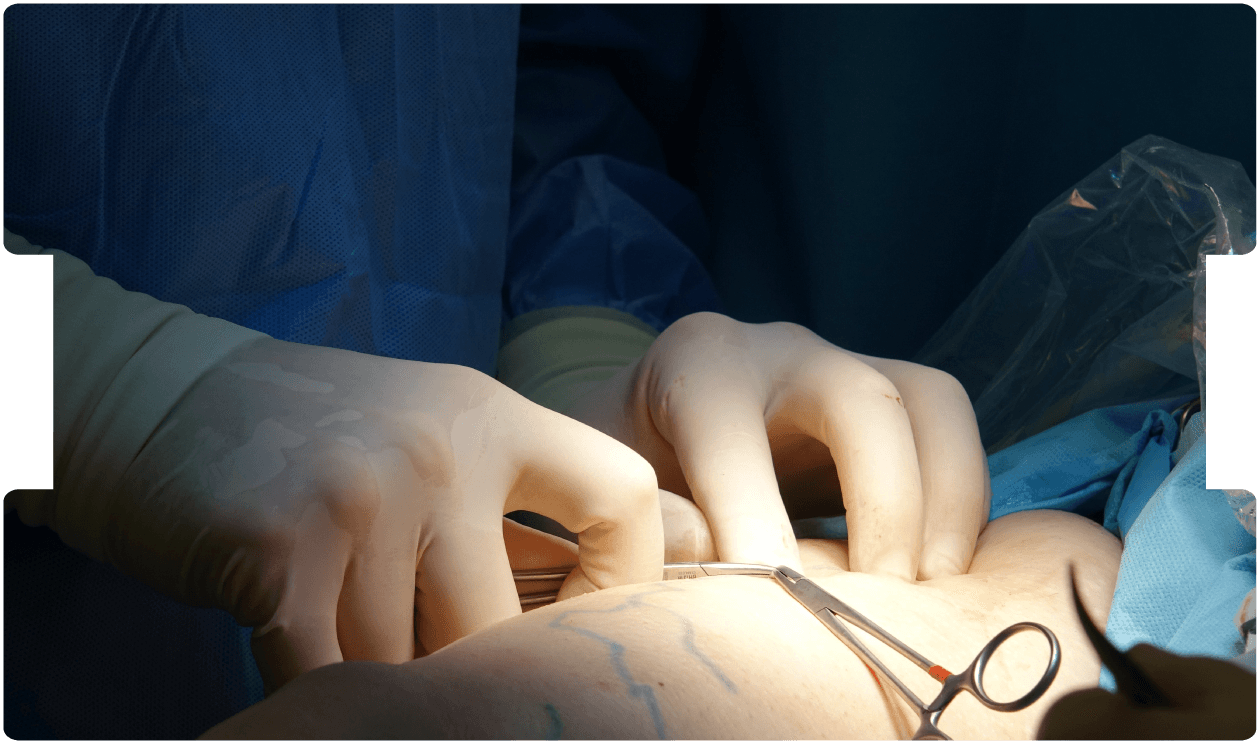
When does a poor cosmetic outcome after oncoplastic breast surgery become a potential negligence claim rather than a recognised complication?
Understanding Oncoplastic Breast Surgery
Oncoplastic breast surgery has transformed breast cancer treatment by combining cancer treatment with reconstructive techniques. In appropriately selected patients oncoplastic surgery enables to preserve or restore breast shape, volume and symmetry while maintaining oncological safety. The Association of Breast Surgery (ABS), together with BAPRAS, have published best-practice guidance aimed at optimising both clinical and patient-reported outcomes. Depending on the tumour and the patient's circumstances, surgery may involve therapeutic mammoplasty, volume replacement using local tissue such as chest wall perforator flaps, or mastectomy with immediate or delayed reconstruction using implants, autologous tissue or a combination of techniques. Aesthetic outcome is important in oncoplastic surgery but is inherently subjective. Perfect symmetry cannot be guaranteed, and breast appearance may change because of surgery, radiotherapy, ageing, weight change or hormonal factors.
For solicitors assessing a potential claim, the type of procedure undertaken and the clinical reasoning behind it may therefore be important from the outset. The relevant question is not simply whether the eventual appearance was unsatisfactory, but whether the chosen reconstructive approach was reasonable for that patient, taking account of the tumour, anticipated cancer treatment, individual risk factors and the alternative options available.
Complications and Outcomes
However, oncoplastic surgery is complex and associated with recognised complications such as bleeding, infection, seroma, delayed wound healing, altered sensation, scarring, fat necrosis, asymmetry or the need for further surgery. Despite careful patient selection, informed consent and technically sound surgery, patients may experience sub-optimal cosmetic outcomes such as contour irregularity, volume loss, and changes in nipple position.
In oncoplastic surgery, individual risk is influenced by both the procedure and patient factors such as smoking, diabetes, obesity, previous radiotherapy, co-morbidity and previous surgery. Seroma, fat necrosis and wound-healing problems, for example, may occur despite appropriate care. Implant reconstruction carries additional risks including infection, implant loss, capsular contracture, rupture and eventual revision surgery. Autologous reconstruction carries different risks, including problems with tissue blood supply and, in free-flap surgery, flap failure.
A recognised complication may occur despite appropriate care; conversely, an adverse outcome may sometimes result from inadequate patient selection, surgical planning, technical performance or postoperative management. A complication, the need for further surgery or an unsatisfactory cosmetic outcome does not, in itself, establish negligence.
In a medico-legal investigation, the chronology surrounding the complication can be particularly important. Solicitors may need to consider not only why the complication occurred, but how quickly it was identified, what action was taken once concerns arose and whether earlier or different management would probably have altered the outcome. Pre-operative assessments, operative records, postoperative notes, photographs and records of subsequent corrective procedures may all assist an expert in distinguishing a recognised complication from potentially avoidable harm.
Why Consent Matters
The existence of recognised complications is precisely why good consent is so important. Consent is a process of shared decision-making that enables patients to understand the benefits, material risks and reasonable alternatives and to decide consistent with their own priorities. This is particularly important in oncoplastic surgery because several reasonable treatment options may exist. One patient may prioritise breast preservation, another may wish to avoid implants, while another may place greater importance on symmetry or minimising further surgery. The principles established in Montgomery v Lanarkshire Health Board reinforce the importance of discussing material risks and reasonable alternatives. These principles are supported by the General Medical Council and the Royal College of Surgeons.
A good clinical record should therefore demonstrate the decision-making process. The patient understands the available treatment choices. The benefits, risks, potential complications and reasonable alternatives have been discussed, and her understanding has been confirmed. She has had the opportunity to review written information, discuss the options with the specialist breast care team and take sufficient time to consider her decision. Good consent enables the patient to make an informed decision about the treatment that is right for her.
For solicitors, this means the investigation should usually extend beyond the signed consent form itself. Consultation records may reveal what risks and alternatives were discussed, what mattered most to the patient and whether expectations around appearance, symmetry, further surgery or reconstruction were properly explored. Where a claimant says they would have chosen differently if adequately informed, the contemporaneous documentation surrounding that decision-making process may become particularly significant.
A Practical Medico-Legal Approach
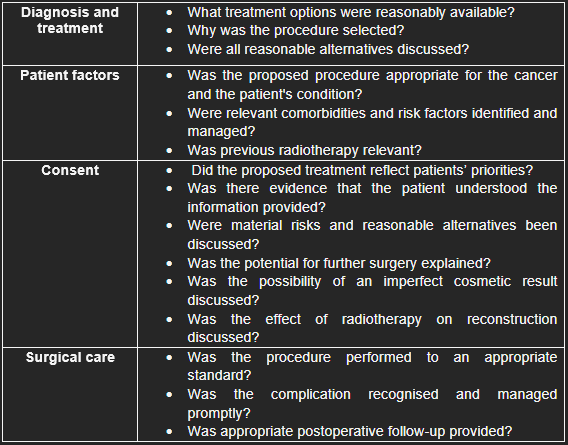
The important question is whether the outcome represents a recognised risk of the procedure or resulted from a failure to meet the appropriate standard of care. When assessing an adverse outcome, the focus should be on the whole clinical journey: Was the patient appropriately selected? Were reasonable alternatives discussed? Were material risks explained? Was the operation appropriate and performed to an acceptable standard? Were complications recognised and managed promptly? And did any alleged breach actually cause the outcome complained of? These questions help distinguish an unfortunate but recognised outcome from avoidable harm.
Conclusion
Oncoplastic breast surgery carries recognised risks and can lead to aesthetic dissatisfaction occur. For the medico-legal practitioner, the presence of a complication is not synonymous with negligence. A fair assessment requires consideration of patient factors, treatment choices, consent, surgical and postoperative care, and the eventual oncological, functional and aesthetic outcome. Ultimately, the distinction between an unfortunate outcome and avoidable harm is fundamental to the fair assessment of oncoplastic breast surgery and reconstruction.
A Practical Checklist for Solicitors
When assessing a potential claim, consider:
Tags:
- Oncoplastic Breast Surgery
- Breast Health Litigation
Expert Disciplines:
- Breast Surgery
About The Author

Professor Amtul Razzaq Carmichael
Consultant Oncoplastic Breast Surgeon
Professor Amtul Razzaq Carmichael is a Consultant Oncoplastic Breast Surgeon and Expert Witness, providing clinical negligence reports since 2020. Her medico-legal work includes cases involving breast cancer diagnosis and missed diagnosis, and she has experience reviewing medical records and providing expert opinion for legal proceedings.
Find out why 70+ legal firms partner with INNEG.
Request a callback, or contact us.
INNEG respects your privacy. Any information you share with us will be used only to respond to your query.
Phone
+44 161 870 2461Thank you for your request!
We will get back to you as soon as possible.