Paediatric Neurological Injury: Prognosis, Causation and Medico-Legal Evidence
By Dr Anirban Majumdar, Consultant Paediatric Neurologist
Posted 09 September 2026
10 Minute Read
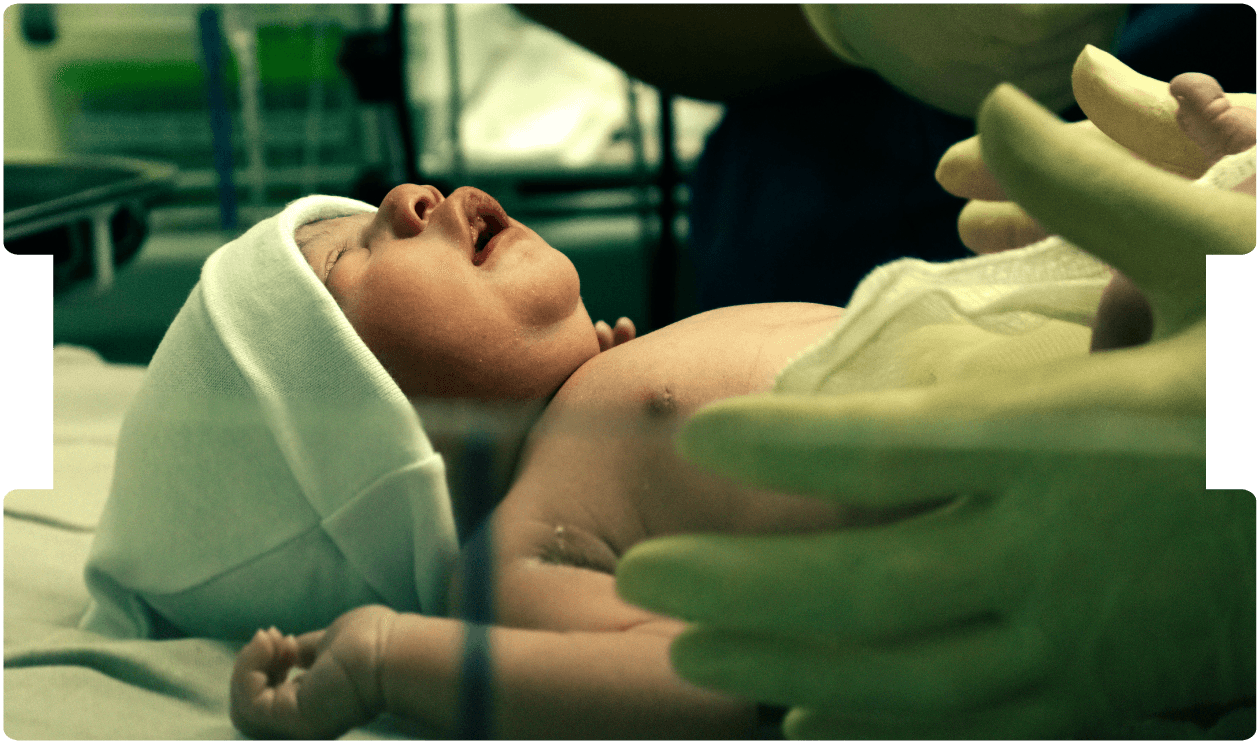
In paediatric birth injury claims, the biggest medico-legal challenge may be knowing when the clinical picture is clear enough to predict the future.
Establishing the long-term consequences of a neurological injury in a child can be particularly challenging. Early imaging may provide important evidence, but childhood brain development, plasticity and emerging neurodevelopmental difficulties mean the eventual clinical picture may look very different several years later.
Early Brain Injury and the Limits of Prognosis
One of the most important points for solicitors dealing with birth injury claims is that an early MRI scan cannot necessarily answer every question about a child's future.
According to Dr Majumdar, a child's brain continues growing and developing well beyond infancy. Early investigations can therefore provide a valuable indication of the areas that may have been damaged without necessarily predicting precisely how the child will function later in life.
For example, a particular area of cerebral injury may suggest weakness on the opposite side of the body. That finding alone does not determine whether the child will ultimately be able to walk, communicate, participate in education or complete everyday activities independently.
Development is influenced by considerably more than the anatomical location of an injury.
Movement, cognition, sensory processing, communication, family interaction, play and environmental stimulation can all contribute to how a child's abilities develop.
This distinction is important medico-legally. Imaging can provide evidence about injury, but translating that injury into lifelong functional consequences may require longitudinal clinical assessment.
Brain Plasticity and Clinical Uncertainty
Another reason prognosis can be difficult in very young children is neuroplasticity.
Dr Majumdar describes plasticity as a phenomenon particularly relevant during the early years of childhood, in which functions normally performed by an injured part of the brain may, in some circumstances, be taken over by another area.
Language provides one example. If an injury affects an area ordinarily responsible for language, another part of the developing brain may potentially assume some of that function.
This creates an unavoidable area of uncertainty.
An early neurological assessment can identify likely areas of difficulty, but time may ultimately demonstrate whether the original prediction was accurate.
“Function that is lost can be recovered.”
For solicitors, this is an important reminder that uncertainty within an expert report does not necessarily reflect inadequate evidence or a lack of expertise. In paediatric neurology, the uncertainty may be clinically genuine.
Dr Majumdar emphasises that experts must be able to communicate these “grey areas” clearly so that solicitors, barristers and judges can understand what can — and cannot — reliably be concluded.
Cerebral Palsy: Clinical Risks and Evolving Presentation
Cerebral palsy is often associated primarily with movement difficulties, but Dr Majumdar explains that this represents only one component of a much broader clinical picture.
Movement can affect a child's ability to interact with their environment. Reaching for objects, feeding, playing and moving independently all contribute to development and participation.
Cerebral palsy may also be accompanied by difficulties involving:
- Cognition and learning.
- Vision and hearing.
- Communication.
- Sensory processing.
- Participation in education and family life.
- Epilepsy and other neurological complications.
This means that evaluating severity purely by reference to muscle stiffness or gross motor impairment risks overlooking important aspects of the child's future needs.
Some motor difficulties may begin to become evident at around 18 months, with physiotherapists often identifying delayed or unusual motor milestones.
Other difficulties can take longer.
Dr Majumdar notes that neurodevelopmental presentations such as ADHD or autistic traits are not usually straightforward to identify in very young children. The phenotype — the observable clinical presentation - can therefore evolve as the child grows.
For litigation, this can have important consequences when assessing condition, prognosis and quantum.
Epilepsy and Associated Neurological Difficulties
Where structural brain injury or cerebral palsy is present, epilepsy may form another part of the child's neurological picture.
Seizures themselves can affect participation and day-to-day functioning. Treatment may also have consequences, including medication effects that alter how a child interacts with or perceives their environment.
The important point is that these difficulties should not necessarily be considered in isolation.
Movement, epilepsy, cognition, communication and sensory function can interact, producing a complex overall clinical picture.
A medico-legal assessment therefore needs to consider how these elements combine rather than treating each diagnosis as an entirely separate issue.
Medico-Legal Considerations: When Should Prognosis Be Assessed?
Litigation creates an understandable desire to establish a child's long-term position as early as possible.
Clinically, however, the evidence required for causation and the evidence required for condition and prognosis are not necessarily available at the same time.
Dr Majumdar draws an important distinction between the two.
Causation
A causation opinion may often be possible relatively early.
The relevant evidence is likely to include:
- Antenatal records.
- The circumstances surrounding birth.
- Neonatal records.
- Imaging.
- Blood gas results.
- Early postnatal records.
Together, these may allow an expert to form an opinion about the mechanism and timing of injury without waiting several years.
Condition and Prognosis
Assessing the child's eventual functional outcome is more difficult.
Dr Majumdar suggests that commencing this assessment from around three years old can be appropriate, depending on the circumstances, but notes that later assessment may provide greater certainty.
This distinction can be particularly important when quantum depends on future cognitive, educational, care or communication needs.
A paediatric neurologist may also only form part of the evidential picture. Depending on the child, additional input could be required from neuropsychologists and experts in communication, care or accommodation.
Causation: Could There Be Another Explanation?
Not every child presenting with cerebral palsy-like symptoms has difficulties caused by a birth injury.
This is a particularly important issue when considering causation.
Dr Majumdar explains that when reviewing a child, paediatric neurologists continually consider whether the accepted clinical narrative adequately explains what they are seeing.
A diagnosis of cerebral palsy accompanied by an unremarkable birth history and normal MRI findings, for example, may justify further investigation.
Alternative explanations can include genetic, metabolic or other neurological conditions.
For solicitors, this means the presence of neurological impairment following birth does not itself establish that the impairment was caused by events surrounding delivery.
The wider clinical picture must fit.
Treatable Conditions That Can Mimic Cerebral Palsy
The differential diagnosis becomes particularly significant where an alternative condition may be treatable.
Dr Majumdar discusses dopa-responsive dystonia as one important example.
Children with the condition can display symptoms resembling cerebral palsy, including stiffness and significant mobility difficulties. Yet the underlying mechanism is different, and the condition can respond dramatically to levodopa treatment.
Identifying such a diagnosis can fundamentally change both the child's clinical future and the medico-legal analysis.
It illustrates why an expert should not simply accept an existing diagnostic label without considering whether it is consistent with the history, imaging and clinical examination.
“Could it be something else other than the current narrative?”
That question is central both to good neurological practice and robust causation analysis.
Case Examples and Outcomes
The podcast highlights several types of presentation in which the initial clinical explanation may require reconsideration.
One is the child diagnosed with cerebral palsy despite having no significant abnormal birth history and normal MRI findings. That combination may prompt investigation for an underlying genetic or metabolic condition.
Another is a child with cerebral palsy-like motor difficulties who ultimately proves to have a treatable neurological disorder such as dopa-responsive dystonia.
Dr Majumdar also discusses situations in medico-legal practice where a birth-related injury is established but subsequent neurodiversity is attributed entirely to that injury.
In some cases, he says, the medical evidence may not support that association.
This is precisely where expert independence becomes important. The role of the expert is not to construct the strongest possible case for the instructing party but to determine what conclusions the clinical evidence can reasonably support.
Expert Independence in Paediatric Neurology Claims
Dr Majumdar works for both claimant and defendant solicitors and considers maintaining that balance important to his independence.
Working exclusively for one side, he suggests, can create a risk of becoming accustomed to viewing cases through only one perspective.
Regardless of who provides the instruction, an expert report is ultimately prepared for the benefit of the court.
That requires the expert to answer the questions contained in the letter of instruction while remaining true to the clinical evidence.
“Every report you have to exhibit a degree of independence.”
The principle becomes particularly important when an expert's opinion does not support the instructing party's preferred interpretation.
An expert may conclude, for example, that an underlying genetic condition better explains a child's presentation, or that later neurodevelopmental difficulties cannot reliably be attributed entirely to an earlier birth injury.
Those conclusions may be disappointing to the instructing solicitor, but they are fundamental to the expert's duty.
Giving Neurological Evidence in Court
Complex paediatric neurology must ultimately be understandable to lawyers and judges who do not share the expert's specialist medical training.
Dr Majumdar describes this as one of the key skills required when giving evidence.
Preparation is essential, but so is the ability to reduce complicated neurological concepts to the central issue the court needs to decide.
Cross-examination requires another skill: knowing when to maintain an opinion and when it is appropriate to concede a point.
An expert who recognises legitimate limits in their evidence can demonstrate independence and credibility.
Humility, in this context, does not weaken an expert opinion. It can reinforce it.
Key Takeaways for Solicitors
For those handling paediatric neurological and birth injury claims, several practical lessons emerge from the discussion.
Do not treat an early prognosis as necessarily definitive.
MRI and neonatal evidence may identify likely injury patterns, but development and plasticity can change the child's eventual functional presentation.
Separate causation from condition and prognosis.
Causation evidence may be available relatively early, whereas a reliable assessment of long-term needs may require further development and reassessment.
Consider the whole clinical picture.
Motor impairment, cognition, epilepsy, communication, vision, hearing and participation can be interconnected.
Do not assume every cerebral palsy-like presentation has the same cause.
Normal imaging or an unusual history may justify investigation for genetic, metabolic or other neurological conditions.
Use the right expert disciplines at the right stage.
Paediatric neurology may provide an important overview, but neuropsychological, communication and care evidence may also be required.
Make letters of instruction precise.
Focused questions and clearly organised medical records help the expert concentrate on the evidence most relevant to the issue being determined.
Dr Majumdar's final advice to solicitors is particularly straightforward:
“Be as precise in their questions as possible.”
Clear instructions do more than save expert time. They can support a more focused analysis of the medical records and ultimately a clearer opinion.
Dr Anirban Majumdar's discussion provides valuable insight into why paediatric neurological prognosis can rarely be reduced to a single scan, diagnosis or assessment.
From brain plasticity and evolving cerebral palsy presentations to alternative diagnoses, expert independence and effective letters of instruction, the episode explores the clinical uncertainties that can make birth injury litigation particularly complex.
Tags:
- Neurological Litigation
- Neurologist Expert Witness
- Birth Injury Claims
Expert Disciplines:
- Paediatric Neurology
About The Author

Dr Anirban Majumdar
Consultant Paediatric Neurologist
Dr Aniraban Majumdar is a Consultant Paediatric Neurologist at Bristol Royal Hospital for Children, with more than 24 years’ experience in paediatrics and almost 20 years as an independent expert witness. He advises both Claimant and Defendant solicitors in complex paediatric neurological and birth injury matters.
His clinical work includes children with complex neurological, genetic and neuromuscular conditions, and his medico-legal experience encompasses causation, condition and prognosis in complex paediatric cases.
Find out why 70+ legal firms partner with INNEG.
Request a callback, or contact us.
INNEG respects your privacy. Any information you share with us will be used only to respond to your query.
Phone
+44 161 870 2461Thank you for your request!
We will get back to you as soon as possible.