When Hand & Wrist Injuries Don’t Heal as Expected: Delays, Surgery and Long-Term Prognosis in PI Claims
By Mr Rupert Wharton, Consultant Trauma and Orthopaedic Surgeon
Posted 06 October 2026
8 Minute Read
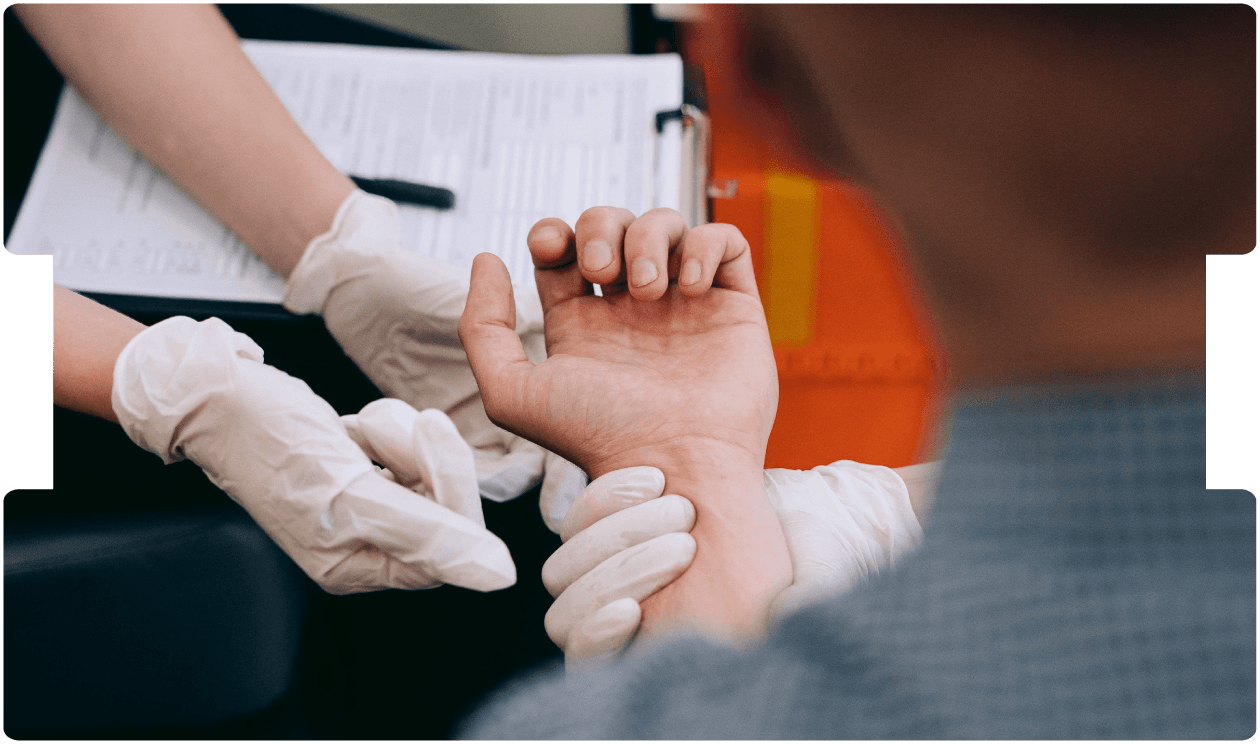
When recovery from a hand or wrist injury does not follow the expected course, solicitors need to ask whether the issue is the injury itself, missed pathology, inadequate treatment or the need for further specialist evidence.
Recent British Society for Surgery of the Hand (BSSH) data has cited up to five million hand and wrist injuries per year, requiring 250,000 operations (Shaw AV & Sep, 2023). The latest Health and Safety Executive (HSE) figures show that 680,000 workers sustained a non-fatal workplace injury in Great Britain in 2024/25, based on the labour force survey. Workplace injuries caused an estimated 4.4 million lost working days in Great Britain in 2024/25 (Health and Social Care Executive, 2026), and approximately 124,000 resulted in more than seven days' absence.
Why might some injuries recover slowly?
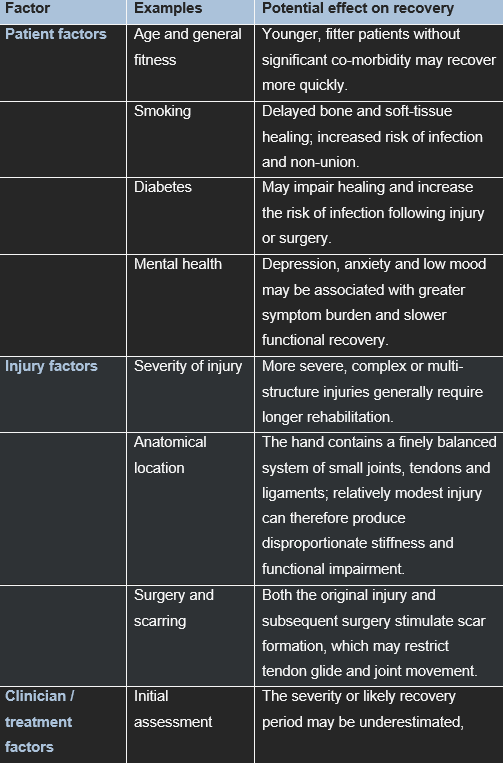
Experts examining cases which have not progressed within the expected timeframe will usually consider the following contributing factors which all need to be excluded or addressed.
Patient factors: Recovery following injury is correlated with younger age and the absence of co-morbidities (a fitter individual). Smoking and diabetes particularly delay bone healing and increase the risk of infection after an open injury or surgery. The presence of mental ill-health such as depression, low mood and anxiety can all also hamper recovery after injury.
Injury factors: As expected, more severe injuries take longer to heal. Location is also important. In the hand particularly, the balance of joints, ligaments and tendons is delicate, and disruption to them, especially if combined with the further traumatic insult of surgery, is disproportionately damaging. Injury and surgery both promote the formation of scar tissue, and these delicate structures are often unable to counteract the formation of scar tissue, while joints with more powerful muscles acting on them, such as the hip or the knee, do not suffer the same fate.
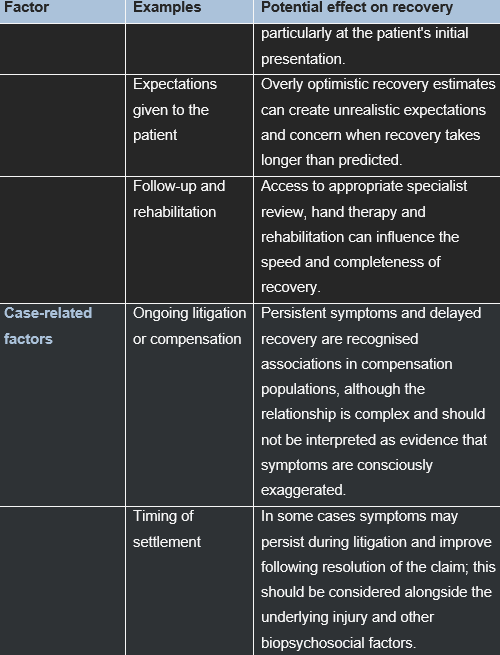
Clinician factors: In medicolegal practice it is important to bear in mind that the original treating clinician may have under called the injury. Commonly patients interact first with an emergency department clinician, who may have limited experience of orthopaedic injuries. Surgeons, shaped by the nature of the operations they perform, may focus less on recovery times for injuries managed non operatively. Hospitals are under great pressure to discharge patients from follow up, and the reality is that often patients are counselled incorrectly and given falsely low recovery times. This ‘primacy’ of dictum stays with the patient and they may feel a sense of failure at not having recovered within a falsely optimistic time scale.
Case related factors: It is well recognised that in cases where compensation is due, recovery is prolonged, and experienced medicolegal experts will commonly state that symptom resolution may be unlikely until after a given case has settled.
Could further surgery help?
The role of an orthopaedic Expert Witness is of course to set out to the Court their opinion on causation and prognosis, or breach and causation dependent on the case. But a good expert should at some point in their report consider what measures might be addressed to a given Claimant to help them recover faster. Presented below are three cases from my recent medicolegal practice where further surgery has been of benefit:-
Case 1
Missed diagnosis – base of thumb fracture
A 32 year old right handed laboratory technician was injured when his bicycle was hit by a car. He presented to his local emergency department where life threatening injuries including a femoral shaft fracture were safely managed. As part of his claim I was asked to evaluate his thumb pain. In this case radiographs were never taken – the Claimant had a distracting injury and the thumb wasn’t sore at the time of injury. But shortly after the injury he notes progressive pain and swelling. To my examination there was pain at the thumb base and a subtle clinical step. Radiographs (x-rays) were taken which revealed a united thumb metacarpal intra-articular fracture. The Claimant has been referred to a local hand surgeon, and subsequently underwent an osteotomy (an operation to re-cut and re-set the bone in a better position) with good resolution of pain.
Key point: In the context of more serious injuries, Claimants may not complain of pain from the hand and wrist at the time of injury. But here there was a missed injury, which allowed a more JCG bracket to be explored, allowing the funding of future healthcare.
Case 2
Removal of metalwork required
A 49 year old motorcyclist was hit by a car and sustained a closed fracture of the distal radius and scaphoid. Both injuries were managed operatively with a screw placed appropriately in the scaphoid, and a volar plate to hold the distal radius fracture. Both bones united but the Claimant had ongoing pain. To my examination the Claimant had residual stiffness and pain at end of range with a reduced grip strength. My recommendation was removal of the metalwork as a first step. The Claimant saw his original Consultant who removed his metalwork, with good resolution of stiffness, a reduction in pain and improved grip strength.
Key point: In clinical practice the removal of previously implanted metal is commonly associated with improved range of movement and a reduction in pain, and there is usually very little surgical risk.
Case 3
Neuroma excision
A 45 year old glass fitter sustained a sharp laceration to the front of his wrist. The glass divided tendons that flex the wrist, and the median nerve (see fig 1). All structures were repaired but median nerve function remained lost, with exquisite pain on accidental knocking of the surgical scar. My recommendation was referral to a peripheral nerve surgeon for excision of neuroma. Following the surgery the Claimant’s hand function remained limited, but the pain completely resolved, allowing him to return to his manual work which had previously been impossible.
Key point: nerve injury is commonly associated with neuroma or scar tissue formation, and removing this can improve pain significantly.
If further surgery is not indicated, could other experts help?
Mentioned above is the impact of mental ill-health on recovery. It is my experience that in almost all cases of serious injury there is residual anxiety or altered mood which is usually not routinely addressed by treating orthopaedic colleagues, or provided for by insurance following a car accident. When mentioned to Claimants most show significant relief at the thought of being referred for help, and the difference to the JCG bracket is often important.
Similarly, there may be cases where the orthopaedic injury is by contrast considered minimal, and yet a Claimant continues to suffer symptoms out of proportion to the injury. It may be that these symptoms cannot be explained on the basis of the orthopaedic injury, and the involvement of Pain Management Experts is often very helpful here, both for Causation commentary, but also for suggestions for symptom management going forward.
Conclusion
In summary, hand and wrist injuries are common. Recovery is often many months and this may be in contradiction to what Claimants were original told during consultations. Targeted further surgery can be rewarding for clinicians and Claimants, and for the purposes of the Claim, unrecognised psychological symptoms commonly mandate the opinion of a Psychological Expert.
Works Cited
Health and Social Care Executive, 2026. Working days lost in Great Britain. [Online]
Available at: https://www.hse.gov.uk/statistics/dayslost.htm?trk=public_post_comment-text
Shaw AV, H. D. J. V. F. C. W. J. W. R. T. R. R. E. G. M. & Sep, R. H. C., 2023. RSTN COVID Hand: Hand trauma in the United Kingdom and Europe during the COVID-19 pandemic. J Plast Reconstr Aesthet Surg, Volume 84, pp. 258-265.
Figure 1: Schematic anatomy of the median nerve at the level of the wrist.
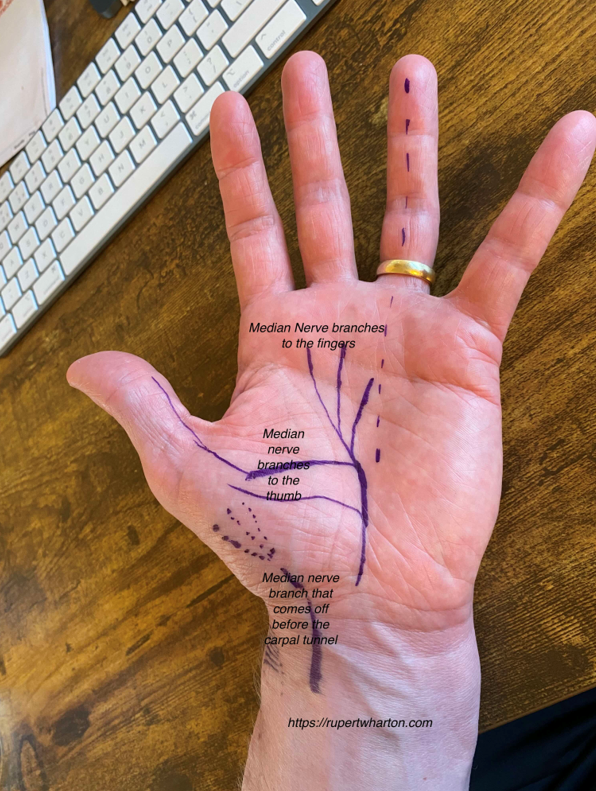
Table 1: Factors that may influence recovery after hand and wrist injury
Tags:
- Hand and Wrist Surgery
- Orthopaedic Expert Witness
- Orthopaedic Trauma
- Trauma
Expert Disciplines:
- Orthopaedic Surgery
About The Author
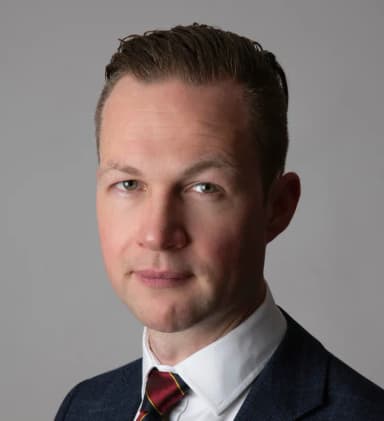
Mr Rupert Wharton
Consultant Trauma and Orthopaedic Surgeon
Mr Rupert Wharton is a Consultant Trauma and Orthopaedic Surgeon and Expert Witness with 3 years’ medico-legal reporting experience, having undertaken expert work since 2023. He prepares around 50 reports per year across Claimant, Defendant and joint instructions and has experience preparing joint statements.
His specialist expertise includes hand and wrist fractures, ligament and tendon injuries, nerve compression and injury, carpal and cubital tunnel syndrome, wrist arthroscopy, thumb base arthritis and joint replacement, making him particularly suited to Personal Injury instructions involving upper limb trauma and functional impairment.
Find out why 70+ legal firms partner with INNEG.
Request a callback, or contact us.
INNEG respects your privacy. Any information you share with us will be used only to respond to your query.
Phone
+44 161 870 2461Thank you for your request!
We will get back to you as soon as possible.