Neuro-Oncology Claims: Imaging, MDTs & Causation
By Professor Sotirios Bisdas, Consultant Neuroradiologist
Posted 10 June 2026
8 Minute Read

Neuro-oncology litigation often turns on what imaging showed, what should reasonably have been identified, and how those findings influenced clinical decision-making.
Watch the full webinar with Professor Sotirios Bisdas here >
In this detailed article, we explore the key medico-legal themes from Professor Bisdas’ webinar, including MRI interpretation, disease monitoring, MDT decision-making, delayed diagnosis and causation in brain tumour claims.
The Role of MRI in Brain Tumour Claims
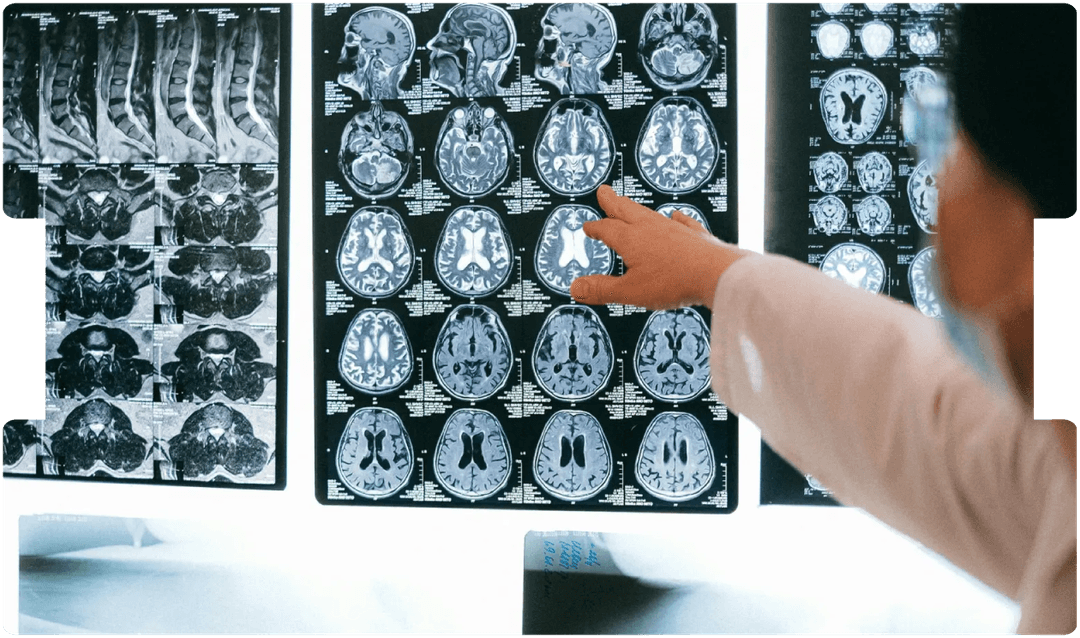
MRI is central to neuro-oncology diagnosis and follow-up, but it has limits. Professor Bisdas explained that MRI can usually establish the presence, location and approximate volume of a lesion. It can also show mass effect and provide a baseline for later comparison.
However, MRI alone cannot reliably determine molecular tumour classification, nor can it pinpoint the exact onset date of a tumour. These issues require wider clinical, histological, molecular and oncological evidence.
This distinction is important in litigation. A neuroradiologist may assist the court by identifying what was visible on imaging, whether findings were reasonably reportable, and how appearances changed over time. But prognosis, survival and causation should usually be addressed alongside neuro-oncology and wider clinical expert evidence.
“The imaging we read in a textbook is not, as a rule, the imaging we will see in disclosure.”
Tumour Progression: Clinical and Imaging Risks
In neuro-oncology claims, clinical risk often arises from misunderstanding tumour progression. Imaging appearances can change after surgery, radiotherapy, chemotherapy or immunotherapy, and those changes do not always mean the tumour is worsening.
Professor Bisdas highlighted several key concepts solicitors should understand:
Pseudo-progression can occur after chemoradiation, particularly in glioblastoma cases. Imaging may appear worse, but this can reflect a transient treatment-related effect rather than true tumour growth.
Pseudo-response can occur with certain therapies, where reduced enhancement gives the impression of improvement, while viable tumour remains present.
Radionecrosis can mimic recurrence but represents radiation-related tissue injury rather than active tumour progression.
These distinctions matter because the wrong interpretation can affect treatment decisions. For example, premature withdrawal of treatment based on mistaken progression may raise questions around breach, causation and lost opportunity.
“Worsening imaging does not always mean tumour progression.”
Medico-Legal Considerations
The central medico-legal question is rarely whether imaging was perfect. It is whether the imaging, report, escalation and clinical reliance were reasonable at the relevant time and place.
Professor Bisdas drew a clear distinction between trial-grade imaging and real-world imaging. In ideal settings, scans may use high-resolution protocols, consistent sequences and structured measurements. In practice, disclosed records may show variable protocols, missing sequences, inconsistent time points and narrative-style radiology reports.
For solicitors, this creates several important questions:
- Was the imaging protocol appropriate for the clinical presentation?
- Was the lesion or change reasonably identifiable on the scan available at the time?
- Did the radiology report clearly address the relevant clinical question?
- Should the clinician have sought clarification or specialist neuroradiology review?
- Was the case discussed at an MDT, and are the MDT minutes available?
- Did the MDT consider the imaging findings properly?
These questions are particularly relevant where a report contains ambiguous wording, where the clinical team may have over-relied on a limited report, or where specialist escalation was available but not pursued.
“The report may be misleading, and a competent clinician would have sought clarification.”
MDT Decision-Making and Imaging Evidence
The neuro-oncology MDT is often central to both treatment and litigation. Professor Bisdas described the MDT as the setting where imaging, clinical findings, pathology, oncology and surgical views come together to shape patient management.
For solicitors, the MDT record can be crucial. It may show whether the neuroradiologist reviewed the imaging in the full clinical context, whether advanced imaging was considered, and whether the team recognised uncertainty around progression, recurrence or treatment effect.
Where MDT minutes are missing or limited, it can be difficult to identify how the decision was reached or whether any individual clinician failed to act reasonably. A simple MDT outcome note may not reveal who was present, what was discussed, or whether concerns were raised.
This is particularly important in claims involving:
- disputed tumour progression;
- treatment withdrawal or change;
- missed recurrence;
- delayed referral to a tertiary centre;
- failure to use advanced imaging;
- lack of documented escalation.
Causation in Delayed Diagnosis Claims
Causation in brain tumour litigation is often complex. Professor Bisdas emphasised that neuroradiology can help quantify what changed during a delay window, but it should not be expected to answer every causation question alone.
A neuroradiologist may assist by:
- identifying what was visible at each imaging time point;
- assessing whether findings were reasonably reportable;
- comparing serial imaging;
- quantifying radiological change;
- explaining whether imaging appearances support progression, treatment effect or uncertainty;
- commenting on whether further imaging or specialist review was reasonably indicated.
However, survival impact and functional outcome usually require neuro-oncology evidence. The neuroradiologist can describe imaging progression; the oncologist can help translate that into prognosis, treatment opportunity and outcome.
“The neuroradiologist quantifies the imaging features; the neuro-oncologist translates these into survival and functional outcome impact.”
Key Takeaways for Solicitors
Neuro-oncology imaging claims require careful attention to both the scan and the clinical pathway around it.
Solicitors should consider:
- whether the correct baseline scan was used for comparison;
- whether pseudo-progression, pseudo-response or radionecrosis were considered;
- whether the imaging protocol matched the clinical question;
- whether specialist neuroradiology review should have been sought;
- whether MDT minutes are available and sufficiently detailed;
- whether advanced imaging tools were reasonably available;
- whether radiology, oncology and MDT evidence align on breach and causation.
The strongest expert evidence will usually distinguish between what is visible in hindsight and what was reasonably identifiable at the time.
Tags:
- Radiography Negligence
- Neuro-Oncology Litigation
- Brain Cancer Negligence
- Brain Tumour Claims
Expert Disciplines:
- Neuroradiology
About The Author

Professor Sotirios Bisdas
Consultant Neuroradiologist
Professor Sotirios Bisdas is a Consultant Neuroradiologist and MRI Lead at the National Hospital for Neurology and Neurosurgery, with additional paediatric neuroradiology practice at Great Ormond Street Hospital. He has undertaken medico-legal reporting since 2014 and has reported in more than 80 adult and paediatric cases, including brain and spinal injury, stroke, non-accidental injury, cerebral palsy/birth asphyxia and tumour disease.
He acts in Clinical Negligence and Personal Injury matters, with experience preparing joint statements and attending trial. His specialist expertise includes traumatic and birth brain injury, hypoxic-ischaemic injury, neuro-oncology, spinal imaging, head and neck disease and advanced neuroimaging.
From the Blog
Related Articles

Paediatric TBI has lifelong implications for development, cognition, care needs and quality of life - directly shaping causation and quantum. This article expands on the webinar’s clinical guidance and expert‑witness perspectives.
Gain expert insights on how delayed brain tumour diagnoses can impact outcomes, liability, and causation - essential reading for clinical negligence solicitors handling complex neurological claims.
Understand when to instruct a radiologist vs a radiographer in clinical negligence claims - real case examples help clarify expertise, scope, and legal relevance in diagnostic imaging cases.
Find out why 70+ legal firms partner with INNEG.
Request a callback, or contact us.
INNEG respects your privacy. Any information you share with us will be used only to respond to your query.
Phone
+44 161 870 2461Thank you for your request!
We will get back to you as soon as possible.