Symptoms & Late Diagnosis of Colorectal Cancer
By Dr Howard J Klass, Consultant Gastroenterologist
Posted 11 November 2022
5 Minute Read

Colorectal cancer is one of the most common - and preventable - cancers in the UK. This blog explores how delayed diagnosis happens, and what solicitors need to know in medico-legal cases.
By Dr Howard J Klass, MA, FRCP
Colorectal cancer (CRC) may be a source of clinical negligence claims because of delays in, or failure of diagnosis.
CRC is the third commonest cause of cancer worldwide. Most CRCs arise from polyps which start off as benign lesions and as they grow develop malignant features. Survival depends on the stage at diagnosis. Three year survival of Dukes A is 93% and Dukes D 16%.
A patient’s survival depends on their stage at diagnosis. A patient diagnosed at Dukes’ A has a 93% three-year survival compared to 16% if diagnosed at Dukes D. (The Dukes’ staging system is commonly used as a classification system for CRC.)
The key to successful treatment is detection at the earliest possible stage. There are two strategies available to improve the prognosis.
Population based screening in asymptomatic individuals, either by immune-chemical faecal blood testing or flexible sigmoidoscopy to find and excise pre-malignant polyps and to detect early cancers.
Early diagnosis in symptomatic patients.
The latter remains a problem when there are delays in, or a failure to make the correct diagnosis.
What are the Main Symptoms or CRC?
The main symptoms of CRC are predominantly:
Rectal bleeding
Anaemia
Weight loss
Abdominal pain and
Change in bowel habit
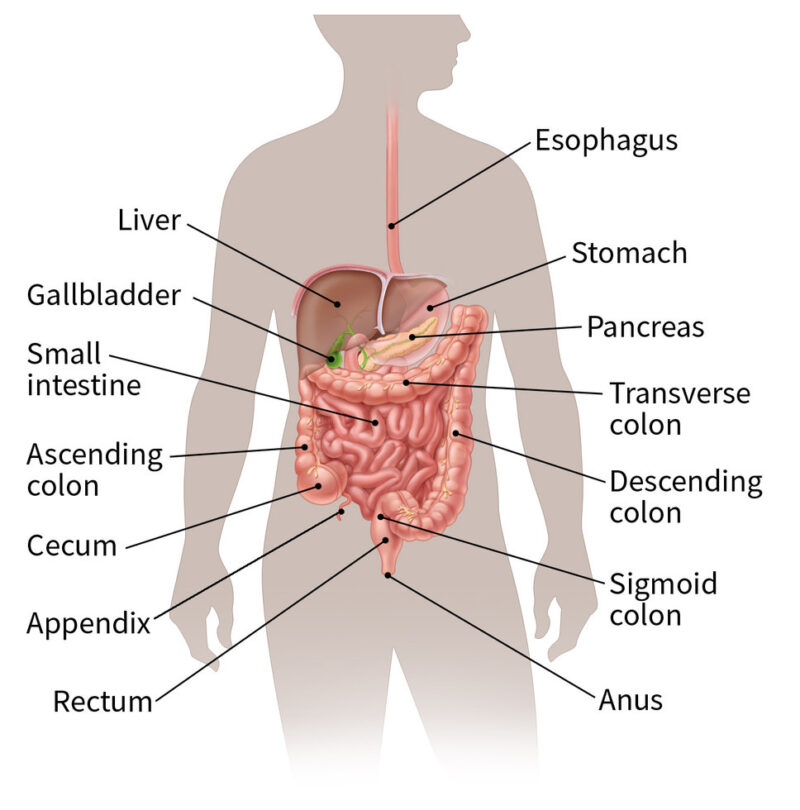
While none of these symptoms are specific to CRC, if a patient over 45 years is experiencing ANY of these symptoms they should investigate them with CRC in mind. (The 45 year age limit is somewhat arbitrary and could arguably be lower).
Why are Some CRCs Diagnosed Late?
The median interval to diagnosis from onset of symptoms is 4-5 months but delayed cases can take 1-2 years. There are three broad reasons why diagnosis is delayed:
Patient Delay: The patient delays in reporting the symptoms to the GP for which there are numerous reasons not relevant to this presentation.
Practitioner Delay:
There are several reasons why:
- Lack of continuity of care
- Initial mis-diagnosis (e.g diagnosing piles as a cause of rectal bleeding)
- Failure to examine (the abdomen and/or rectum)
- Failure to investigate or refer for investigation and - The presence of comorbidities including psychiatric morbidity.
Diagnostic Failures (miss-rate when tests fail to pick up abnormality):
Colonoscopy and CT Colonography (or CT Colonoscopy) are first-line investigations. Diagnostic failures occur when tests fail to pick up an abnormality.
Why do CRC Diagnostic Failures Occur?
It’s always better for a patient to do a Colonoscopy over a CT Colonography as it enables the GP to remove any polyp and to do a skin lesion biopsy on suspicious lesions.
However, there is a miss-rate of 3-5% with either test and patients MUST be counselled on this.
The reasons for missing polyps or cancer are:
Poor bowel preparation for a Colonoscopy. This should, but doesn’t always, lead to a repeat procedure.
Failure to complete Colonoscopy. This happens in 5-10% of patients depending on the Colonoscopist’s experience. It happens because of patient intolerance or other technical factors and again should lead to a second investigation.
False negative biopsies from a lesion identified during a Colonoscopy.
Incomplete removal of a polyp.
Failure to recognize an abnormality from a CT Colonography which when the images are reviewed, was actually visible. This was much more common when barium enema (an X-ray exam) was a primary investigation for CRC. But this can also occur with CT Colonography and routine CT scanning of the abdomen and pelvis even with bowel preparation.
The pandemic significantly disrupted diagnostic pathways—read how this has impacted medico-legal claims in our blog COVID-19 and Cancer Services? Litigation Hotspot.
For a deeper dive into the litigation aspects of these cases, our blog on Colorectal Cancer Litigation explores how delayed diagnosis claims are assessed.
Summary
In summary, Clinical Negligence claims in CRC cases are usually based on an avoidable delay in diagnosis.
The main 3 causes for delays are:
Failure to examine the patient.
Failure to refer the patient for investigation
Missing significant lesions during a Colonoscopy or CT Colonography.
Delayed cancer diagnoses aren’t unique to colorectal cancer—see our analysis of screening delays in Litigation in Cervical Cancer Screening.
About Dr Klass
Dr Howard J Klass, MA, FRCP is a Consultant Gastroenterologist working as a Consultant in NHS and Private Practice in Manchester for 35 years.
Dr Klass has particular interests in liver disease, inflammatory bowel disease and irritable bowel syndrome.
Dr Klass has been undertaking medico-legal work for over 25 years. His work is approximately 50% claimant, 40% defendant and 10% joint.
Want to Discuss Your Clinical Negligence Claim with Dr Klass?
If you’d like to discuss your Clinical Negligence case with Dr Klass, you can contact him by either sending an email to howardklass@inneg.co.uk
Tags:
- Delayed Diagnosis
- Cancer Diagnosis Delay
- Cancer Litigation
- Diagnostic Delay
Expert Disciplines:
- Gastroenterology
About The Author
Dr Howard J Klass
Consultant Gastroenterologist
Dr Howard J Klass, MA, FRCP, is a Consultant Gastroenterologist with over 35 years of experience in both NHS and private practice in Manchester. He has particular clinical interests in liver disease, inflammatory bowel disease, and irritable bowel syndrome. Dr Klass has been providing medico-legal reports for more than 25 years, with his caseload comprising approximately 50% claimant, 40% defendant, and 10% joint instructions.
From the Blog
Related Articles

Gain vital insights into missed mesenteric ischaemia cases, helping solicitors identify breaches, strengthen claims, and understand diagnostic pitfalls in complex clinical negligence scenarios.

Gain crucial insight into COVID-related cancer service delays, their impact on diagnosis and treatment, and rising litigation risks - essential knowledge for clinical negligence practitioners.

Gain expert insight into ovarian cancer diagnosis, management, and legal challenges to help build stronger clinical negligence cases involving delayed diagnosis or surgical complications.
Find out why 70+ legal firms partner with INNEG.
Request a callback, or contact us.
INNEG respects your privacy. Any information you share with us will be used only to respond to your query.
Phone
+44 161 870 2461Thank you for your request!
We will get back to you as soon as possible.