Life Expectancy in the UK following TBI: A Clinician’s Approach
By Dr Julian Harriss, Neurological and Musculoskeletal Rehabilitation Medicine Consultant
Posted 20 March 2026
6 Minute Read

For solicitors handling TBI claims, life expectancy isn’t abstract, it’s a number that dictates cost, exposure, and outcome.
Medical experts are frequently called upon to offer an estimate of a client’s life expectancy following a traumatic brain injury.
Why?
Because it is essential that the courts understand not just the nature and intensity of a client’s surgical, medical, therapy and care needs, but also the duration for which this help will required.
So how is this done, and by whom?
Sometimes no more than a very approximate estimate is needed. A client may have made a good recovery, so seems unlikely to need much help, so annual costs will be modest. Other clients may only have a short time left - either because they are obviously medically fragile, or because they are very old; the range of opinion may be narrow, so probably not worth an expensive actuarial report. In such cases a stand-alone life expectancy report is not required, and instead one or more experts, often a neurologist or rehab consultant, might offer an opinion.
When a more precise estimate is required, for example when a client has comprehensive care needs, and in very complex cases, lawyers often turn to specialists with an established reputation for life expectancy estimation. These experts, and their methodologies, fall into two categories:
Clinicians
Clinicians apply a systems-based approach to risk stratification, apportioning cumulative risk according to a long list of clinically important factors, for example, years of life lost due to:
- the severity of the brain injury
- the severity of other injuries (e.g. long bone fractures, spinal injury)
- ability to walk
- ability to feed oneself
- ability to communicate, especially to communicate discomfort and urgent needs
- pre-injury illness (diabetes, heart disease etc) or trauma (previous TBI etc.)
- co-morbidities, whether as a result of the trauma, or pre-dating the trauma (possibly exacerbated)
- Complications such as seizures, spasticity, pressure sores, aspiration +/- pneumonia, malnutrition, deconditioning and compromised musculoskeletal and cardiovascular fitness
Clinicians are trained and experienced to apply their own clinical judgement, based on experience, and to a greater or lesser degree they draw upon published literature - for example mortality and morbidity tables of people with diabetes or heart disease. This is sometimes called the “Top Down” approach, because the clinician starts the process by determining the life expectancy of a male of a given age in a given country (in the UK, for example, drawing from Ogden tables or the Office of National Statistics)
Statisticians
Statisticians consider large bodies of data, from which relative risks can be stratified. Trends emerge from large samples, and statistical tools can be applied to derive and even quantify relative risks. Concerns have been raised that this approach tends to overlook factors that may be important in a given individual, and that, for whatever reason, estimates based primarily or even exclusively on statistical methods often deliver over-pessimistic predictions. The most commonly referenced literature is that of the Life Expectancy Project: https://www.lifeexpectancy.org/index.html
Whilst we recognise the value of “big data”, it is important to consider some of the shortcoming of this non-clinical approach. Before presenting our own clinician-derived initiative, her is a review of the concerns which have led us - and others - to question the utility of a statistical approach.
Point 1 - problems with an over-reliance on statistical paradigms: a reiterative clinician-led perspective is needed to provide a more nuanced and personalised estimate for a given individual. We are concerned at:
a. Over-reliance on statistical methods. This is most evident when we look at the publications of Strauss and Shavelle, who concede that they no longer apply direct analysis to their more recent (post-1995) database records. Their more recent and updated articles rely instead on novel computational life expectancy calculations, drawn from (primarily statistical) reassessment of conclusions of prior reports.
b. Lack of consideration of current and emergent clinical outcomes; they estimate life expectancies through an analysis of the earlier results, sometimes informed by raw data, sometimes not. Accordingly, their predictions of life expectancy rely not on a clinical evaluation of an individual’s medical condition, but statistical extrapolation.
c. Lack of access to raw data; this lack of access to the primary data is incompatible with academic standards of transparency, and undermines evidential credibility in litigation.
d. Inconsistent statistical methodology. Even if raw data were disclosed it would be difficult to interpret, as a variety of statistical approaches are used (e.g. Log Linear Declining risk ratio method or LDR). As an example, for this statistical tool to be used properly certain assumptions must first be made including acceptance of a convergence point or “parity age”. One obvious flaw with their approach is that they began by using age 90 as the parity age, and then without explanation they chose age 100 instead. This simple and unexplained statistical adjustment reduces life expectancy predictions. Elsewhere Strauss and Shavelle use a different method called the Proportional Life Expectancy “PLE” which generates an even lower life expectancy. Use of PLEs is predicated on the assumption that lifetime risk to a person with a particular condition can be represented by a constant factor when compared to the general population, but clinicians understand that there are very few conditions which are essentially “ageing proof” in this manner. Risk of morbidity and mortality change after a traumatic brain injury, on the one hand these risks diminish as a patient’s condition stabilises, but often increase again as they age.
Point 2 - under-appreciation of the clinical nature and cause of a person’s TBI, their age, sex, co-morbidities and medical stability.
e. Whilst the severity of TBI is a fundamental consideration, clinicians also take into account the nature and cause of a person’s TBI. The clinical presentation and prognosis in a person who has sustained a focal TBI is different from that in someone who has sustained diffuse axonal injury. Outcomes following a single trauma are different from those following cumulative traumas. Haemorrhagic brain injury vs. ischaemic brain injuries following head trauma have different implications, both acutely and long-term.
f. The risks of morbidity and mortality change as we age, as does the prognosis for functional recovery. Irrespective of the implications of a TBI, we need to take age into account when assessing cognition and capacity (in very young people) and mobility (in older adults). Potential recovery of brain function, similarly, is to some extent affected by age: a young brain has greater potential for anatomical repair and accommodation, whereas an older person has reserves of “over-learned” skills.
g. Women live longer than men, and women are less likely to suffer a TBI, largely because of behavioural differences: women tend to engage in less risky behaviours. It is also becoming apparent that the course of brain recovery differs in some respects between men and women, on the basis both of differences in brain architecture and organisation.
h. A person who was healthy and fit before sustaining a TBI is more likely to make a rapid and full recovery than someone with a long and complex past medical history. Similarly, a person who has only sustained only a TBI will most likely do better than a person with a comparable TBI but extensive orthopaedic and other systemic injuries. A history of smoking, obesity, substance abuse, depression and self-harm or suicide attempts is less likely, on the basis of an individual clinical risk assessment, to make a good recovery and live into old age.
i. The predicted life expectancy of a person who has remained medically stable in the months and years following injury will increase, approaching the population average. Conversely, a person who remains very ill in the months following TBI, suffering for example from seizures, aspiration pneumonia, metabolic derangements, systemic infections etc., has a more pessimistic prognosis.
Point 3 - under-recognition of non-medical factors, such as current and trending individual and societal socioeconomic factors, and an individual’s domestic, financial and litigation circumstances.
j. Trends in population life expectancy, especially since the economic crisis of 2008 and subsequent “austerity” policies, and Covid-19.
k. Ditto variation in life expectancy according to geographic and socioeconomic factors, regional, national, and global.
l. Whether the state offers comprehensive and high quality surgical, medical, therapeutic, care, and social services, both for the patient and for all involved in their recovery.
m. What practical support is offered to an individual by family, friends, employer etc.
n. The individual’s own financial resources, which may potentially provide enhanced surgical, medical, therapeutic and care support.
o. The implications of further financial support, once litigation has concluded; as well as optimising surgical, medical, therapeutic and care provision, this may also enhance accommodation and equipment.
Tags:
- Life Expectancy
- Life Expectancy Calculation
- Traumatic Brain Injury
About The Author

Dr Julian Harriss
Neurological and Musculoskeletal Rehabilitation Medicine Consultant
Dr Julian Harriss is a Consultant in Rehabilitation Medicine with medico-legal experience dating back to 2002. He prepares approximately 50 reports per year, with a 60% Claimant, 30% Defendant and 10% joint instruction split, and has experience preparing joint statements and giving evidence at trial.
His specialist expertise includes neurorehabilitation following traumatic brain injury, complex musculoskeletal rehabilitation, paediatric neurorehabilitation, multidisciplinary rehabilitation planning and prognosis. He has held senior clinical leadership roles at King’s College Hospital and Guy’s and St Thomas’, and remains in private rehabilitation practice.
From the Blog
Related Articles

For clinical negligence solicitors, this expert insight on atrial fibrillation clarifies diagnosis, risk factors, treatment, and medico-legal nuances-helping build stronger, evidence-based claims and defenses.

End of life mesothelioma claims demand clinical context. This resource explains what good care really looks like, how records reflect complex decision making, and what solicitors should expect when scrutinising evidence.
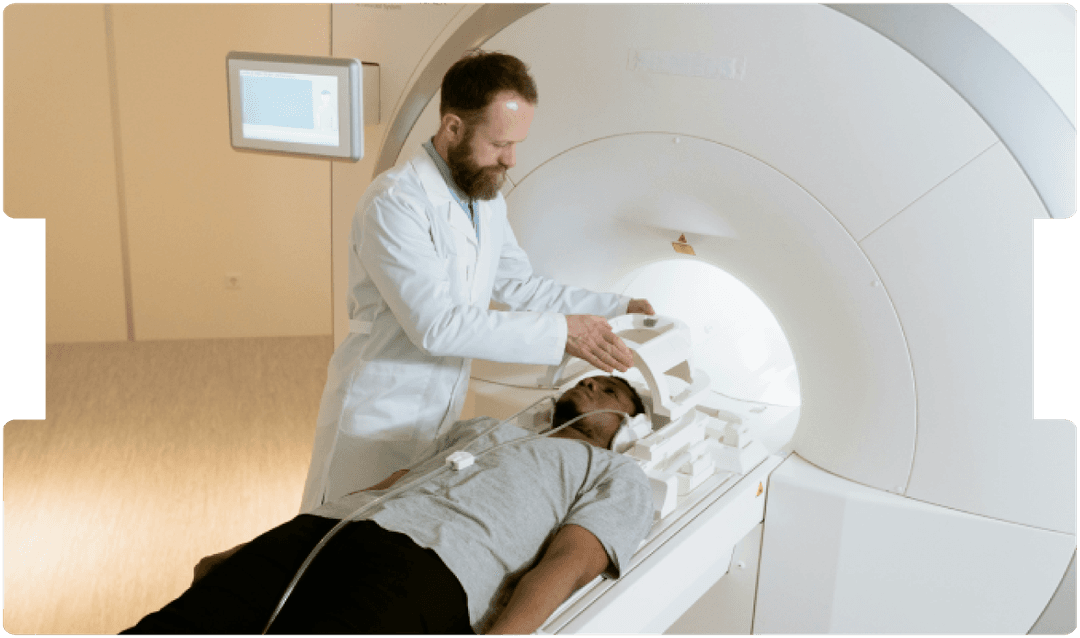
Advanced neuroimaging is transforming TBI litigation. Discover how cutting-edge scans like DTI and rs-fMRI are offering solicitors powerful, objective proof where traditional imaging falls short.
Find out why 70+ legal firms partner with INNEG.
Request a callback, or contact us.
INNEG respects your privacy. Any information you share with us will be used only to respond to your query.
Phone
+44 161 870 2461Thank you for your request!
We will get back to you as soon as possible.