Hidden Brain Injury Deficits: Understanding Impact and Legal Implications
By Dr Simon Redpath, Consultant Neuropsychologist
Posted 01 July 2026
8 Minute Read
Brain injury claims are often shaped by hidden deficits that do not appear clearly on scans, making specialist neuropsychological evidence essential when assessing functional impact, causation, and medico-legal risk.
Brain injury claims often involve symptoms that are not immediately visible on scans, in early records, or even during initial assessment. This makes expert neuropsychological evidence essential when considering functional impact, causation, attribution, and prognosis.
Watch the full webinar with Dr Simon Redpath here >
Clinical Risks
Brain injury can arise from a wide range of causes, including traumatic injury, hypoxia, stroke, tumour, dementia, infection, inflammatory conditions, and functional neurological disorders. In medico-legal claims, the key issue is often not only whether a brain injury occurred, but how that injury has affected the claimant’s everyday functioning.
Dr Simon Redpath frames acquired brain injury outcomes through “ABC plus B”:
- Affect: emotional outcomes such as anxiety, fear, depression, trauma, and adjustment disorder.
- Behaviour: avoidance, withdrawal, reduced participation, and changes in social functioning.
- Cognition: difficulties with memory, executive functioning, language, perception, attention, and processing.
- Biological factors: physical symptoms, neurological deficits, pain, fatigue, and other bodily consequences.
This framework is particularly helpful where a claimant presents with symptoms that are difficult to pin down. A person may report memory problems, but the underlying issue may be emotional distress, fatigue, sleep disruption, sensory overload, pain, or reduced attention rather than a primary memory deficit.
“Fatigue is different from tiredness. We can push through tiredness. We can’t push through fatigue.”
That distinction matters in litigation. Fatigue can affect physical stamina, emotional resilience, concentration, cognition, social activity, and work capacity. It can also worsen over time where reduced activity leads to deconditioning, isolation, and further psychological impact.
Medico-Legal Considerations
A central theme of Dr Redpath’s webinar is that brain injury outcomes should be assessed through a biopsychosocial model. The older medical model may attribute all post-incident problems to the injury itself. A biopsychosocial approach asks a more careful question: what combination of biological, psychological, and social factors is driving the claimant’s presentation?
This is crucial in personal injury and clinical negligence claims because symptoms may be influenced by:
- the mechanism and severity of the index injury;
- pre-injury personality, coping style, mental health, and cognitive reserve;
- family functioning and home environment;
- access to rehabilitation and NHS resources;
- work, education, financial pressure, and social support;
- post-incident trauma, pain, fatigue, and sleep disruption.
Dr Redpath highlighted that cognitive reserve can significantly influence how deficits present. For example, someone who previously functioned at a very high cognitive level may still score within the “average” range after injury, but that may represent a significant decline for them personally.
This is particularly relevant when interpreting neuropsychological testing. A normal or average score does not always mean there has been no meaningful decline. The expert must consider the claimant’s pre-injury functioning, educational and occupational history, and the real-world impact of any change.
“For a lot of people, the average range would be good news. For him, it was a significant shift down.”
This also affects causation. A claimant may have emotional trauma following an accident, and that trauma may reduce attention, encoding, and recall. The result can appear as a memory problem, when in fact the memory pathway is being disrupted by emotional distress.
For solicitors, this means instructions should not be limited to a broad request for condition and prognosis. Specific questions can help the neuropsychologist address the real medico-legal issues.
Case Examples & Outcomes
Dr Redpath shared several case examples to demonstrate why brain injury claims can be more complex than they first appear.
Case Example 1: Normal MRI, but Significant Functional Change
One case involved a 16-year-old female rear-seat passenger in a road traffic accident. Another rear-seat passenger died. There was no documented loss of consciousness, her Glasgow Coma Scale score showed only a slight dip, and MRI imaging was normal.
On the face of it, this could suggest that no traumatic brain injury occurred.
However, the claimant later showed significant changes in school behaviour, emotional regulation, balance, memory, sensory processing, and sporting performance. She had been an elite athlete performing at national standard, but was unable to return to her previous level.
Further review suggested that her symptoms were consistent with microscopic diffuse axonal injury. This would not necessarily show on MRI, but could affect structures associated with movement control, memory, learning, sensory processing, topographical memory, emotional regulation, and sleep.
“A normal MRI does not necessarily rule out meaningful neuropsychological injury.”
In this case, the clinical presentation, mechanism of injury, witness evidence, and neuroanatomical pattern all supported the opinion that she had sustained a mild traumatic brain injury on the balance of probability.
For solicitors, this case highlights the importance of not relying solely on imaging or early records. Where there is a strong mechanism of injury and clear functional change, neuropsychological evidence can be essential.
Case Example 2: Brain Bleed Identified, but Not Accident-Related
Another case involved a 56-year-old woman whose vehicle was hit from behind by a van. The visible vehicle damage was limited, and she continued her journey to the gym after the incident. Eight days later, imaging identified a subdural haematoma.
At first glance, this might appear to support a traumatic brain injury claim.
However, the medical records showed relevant pre-incident symptoms, including shortness of breath on exertion, palpitations, anxiety, balance symptoms, headaches, uncontrolled hypertension, and probable benign positional vertigo. Formal testing did not identify cognitive impairment, and the bleed was between structures rather than within the brain itself.
The conclusion was that the bleed was more likely an incidental finding rather than caused by the road traffic accident.
This example demonstrates the other side of the medico-legal risk. A scan abnormality does not automatically prove causation. The expert must consider the mechanism of injury, pre-existing medical issues, timing, symptoms, and the overall clinical picture.
Case Example 3: Invalid Testing and Visual Impairment
Dr Redpath also discussed a clinical negligence case involving a claimant with severe visual impairment after management of a meningioma. The claimant had been assessed using visually based, timed neuropsychological tests despite having significant visual deficits.
Unsurprisingly, the claimant performed poorly. However, the poor scores reflected the visual impairment and test validity issues, rather than necessarily proving severe cognitive impairment.
This had important medico-legal consequences, including questions around capacity and financial management.
For solicitors, the lesson is clear: the validity of neuropsychological testing matters. Testing must be appropriate to the claimant’s sensory, physical, and cognitive presentation.
Case Example 4: Poor Rapport and Incorrect Test Instructions
In another case, the claimant recognised a block design test from a previous assessment and explained that she had not previously been told to use all nine blocks. When correct instructions were provided, her performance improved significantly.
Dr Redpath emphasised that standardised instructions and rapport are essential. If instructions are incomplete or the claimant is anxious, disengaged, or unsupported during testing, results may underestimate their true ability.
“Not building rapport, not giving full standardised instructions will lead the examinee to underperform.”
This is a practical reminder that expert methodology can influence outcomes. Solicitors should be alert to inconsistencies between test findings, real-world function, sensory limitations, and the way assessment was carried out.
Key Takeaways for Solicitors
Brain injury claims require careful, structured expert evidence. The most valuable neuropsychological reports do more than describe test results; they explain how symptoms interact, what is likely to be incident-related, and how the claimant’s functional life has changed.
Key points for solicitors include:
- Do not assume that normal imaging excludes traumatic brain injury.
- Do not assume that abnormal imaging proves causation.
- Consider fatigue, sleep, pain, trauma, mood, and social withdrawal as part of the functional picture.
- Ask whether cognitive symptoms may be influenced by emotional or psychological factors.
- Explore pre-injury cognitive reserve and occupational functioning.
- Check whether neuropsychological tests were valid, suitable, and properly administered.
- Provide specific questions in instructions where there are concerns about attribution, capacity, prognosis, or functional impact.
Dr Redpath’s final advice was simple and practical:
“If it’s on your mind, put it in the instructions.”
That message is particularly important in complex brain injury claims. Neuropsychologists can often assist with a wide range of issues, but they need clear instructions to address the questions that matter most to the litigation.
Tags:
- Traumatic Brain Injury
- MRI Review
- Neuropsychology
Expert Disciplines:
- Neuropsychology
About The Author

Dr Simon Redpath
Consultant Neuropsychologist
Dr Simon Redpath is a Consultant Neuropsychologist with more than 20 years’ experience working with people affected by acquired and traumatic brain injury, and has acted as a medico-legal expert witness since 2011. He has extensive expertise across traumatic brain injury, hypoxic brain injury, stroke, dementia, Parkinson’s disease and cognitive rehabilitation.
From the Blog
Related Articles
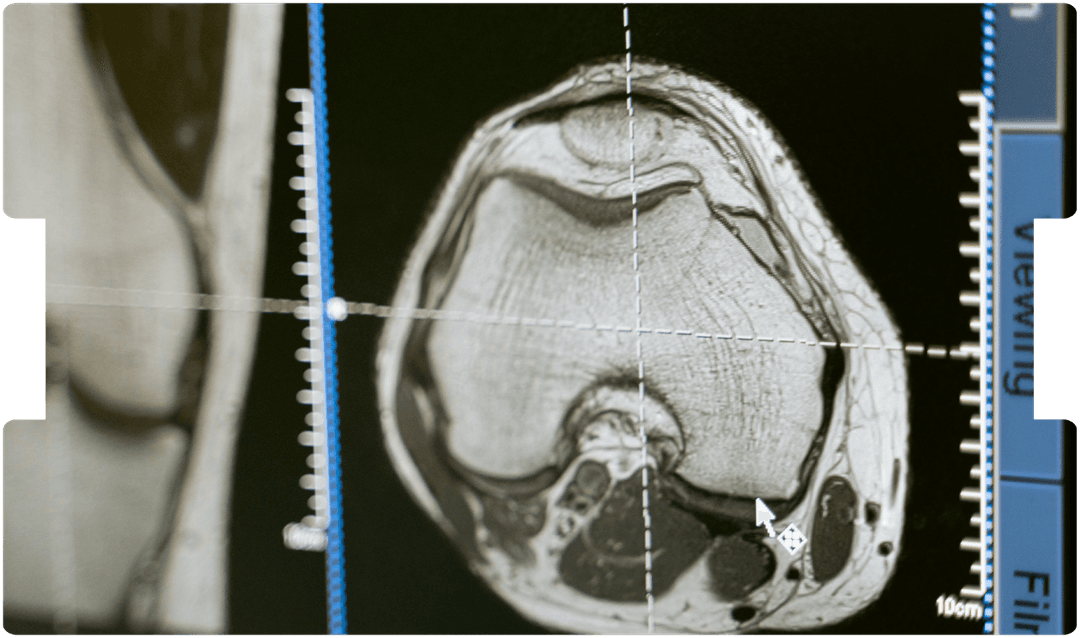
Normal scans, disputed causation, lasting symptoms - discover how expert insight can strengthen your mTBI claims.

This article explores how clinicians approach life expectancy following traumatic brain injury, and why that approach matters in litigation.

Subtle neuropsychological deficits in children are often missed in early years and only emerge when developmental demands increase. This blog explores why reassuring imaging and positive primary school reports can be misleading, and how properly framed expert evidence clarifies causation and long-term risk in paediatric brain injury claims.
Find out why 70+ legal firms partner with INNEG.
Request a callback, or contact us.
INNEG respects your privacy. Any information you share with us will be used only to respond to your query.
Phone
+44 161 870 2461Thank you for your request!
We will get back to you as soon as possible.